01 / VetMedPlus+
A weekly newsletter, built for each reader
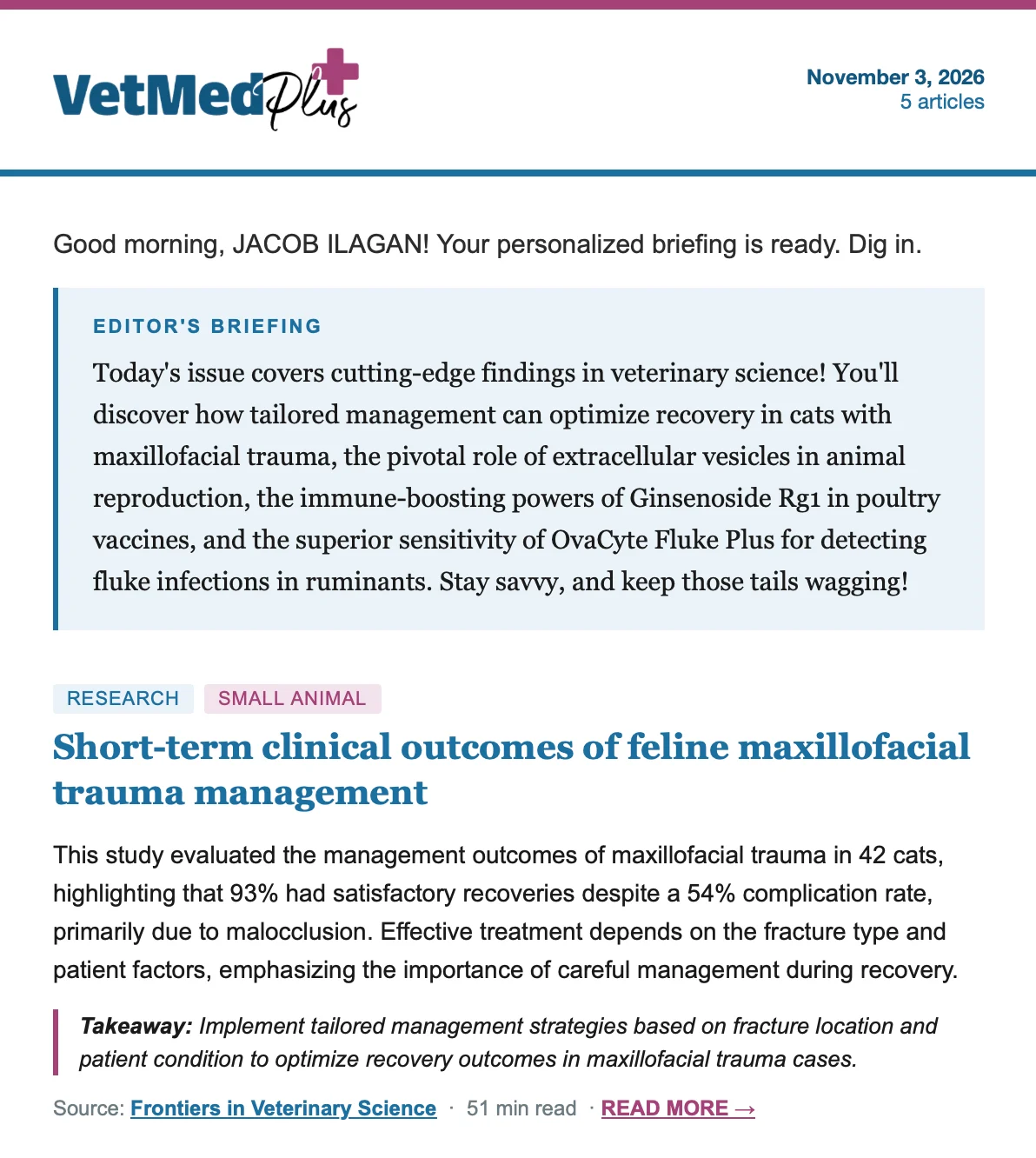
VetMedPlus+ is an automated, AI curated newsletter for veterinary professionals. It's part of a premium membership tier on VetMedTeam, a continuing education platform with about 192,000 registered users. I designed and built all of it on my own, from the database to the subscriber site.
- Problem
- Vets don't have time to follow dozens of research and industry sources, and one digest for everyone wastes the time they do have.
- What I built
- Three production n8n workflows around one Supabase database, plus a Next.js site where members manage preferences with their VetMedTeam login.
- Result
- Every subscriber gets their own weekly email, ranked from about 200 scored articles, with a compliance record for every source. Launching soon.
Context
VetMedTeam sells continuing education to veterinary teams. VetMedPlus+ is part of its premium membership, and its job is simple to say and hard to do well: read the field every day, and send each member only what matters to them.
I was the only developer. That meant the architecture, the database design, every workflow, the subscriber site, and now the move to self hosting.
How it works
Three workflows share one database. Each one does a single job, so a failure in one never quietly breaks another.
The three workflows
Daily ingestion
Every day it polls the RSS feeds and checks each URL against the database before doing any work, so the pipeline never pays to scrape or summarize the same article twice. New articles are scraped in full with Firecrawl. A model then summarizes, scores and tags each one, and the results land in Supabase.
Weekly assembly
Once a week it takes the active subscribers and scores every article against each reader's stated interests. It balances categories so one topic never takes over, and holds the email back if there isn't enough good content. Then it builds the HTML, sends through SendGrid, and writes every send to an audit log.
Compliance
Before any site is scraped, the pipeline checks its robots.txt. Every day it hashes each site's terms of service with SHA 256 to detect changes, archives a snapshot on the Wayback Machine, and emails a compliance log for each source.
Design decisions
- Tags the code can trust. The model returns structured output checked against a JSON Schema and a fixed vocabulary. Every tag is a known value, so matching articles to readers needs no cleanup.
- Personalized for real. Each subscriber gets their own ranking, not one shared email with their name on it.
- Guardrails before sending. A minimum content check and an audit log mean a thin or broken week never reaches inboxes silently.
- Compliance as its own workflow. Respecting each source's rules runs on a schedule and leaves a paper trail, instead of living in someone's memory.
- A real sending service. Email goes out through SendGrid rather than a regular mailbox, so volume can grow without hitting mailbox limits.
The subscriber site
Members manage their interests and browse past issues on a site I built in Next.js 14 and TypeScript. There's no second account to create: they sign in with their existing VetMedTeam login, through a custom Auth0 claim that carries their membership tier.
Where it's going
Directors and the CEO tested it as stakeholders, and I presented it at a Forum Media Group general managers' meeting in Europe. Internally it's now a proof of concept for an automated editorial setup that could be reused for other publications.
I'm also moving n8n from n8n Cloud to a self hosted Ubuntu 24.04 server, running n8n and Postgres 16 in Docker.
The model is the easy part. The value is in everything around it: deduplication, schemas, guardrails and a paper trail.